
What DM-i means and where it comes from
DM means "Dual Mode", meaning the car can run in two modes: electric and gasoline. The letter "i" comes from "intelligent". BYD uses this name for its plug-in hybrids designed for low fuel consumption.
The story begins in December 2008 with the BYD F3DM. It was the world's first mass-produced plug-in hybrid. It had a 1.0-liter engine, two electric motors and a 16 kWh LFP battery, with about 60 km of electric range. Only 48 units were sold in the first year.
Next came the Qin sedan, launched in December 2013 with the second-generation DM: a 1.5-liter turbo engine and a focus on performance. By 2018 another generation, the third, had arrived with gradual improvements. The DM-i system itself was unveiled on November 13, 2020, together with the DM-p performance version. The first production model, the Qin Plus DM-i, went on sale in March 2021.
On May 28, 2024, BYD launched the fifth generation, called DM 5.0, on the Qin L DM-i and Seal 06 DM-i. In 2025, BYD announced an update to this generation with even lower claimed fuel consumption. All the consumption figures below are on the Chinese NEDC cycle, with the battery nearly depleted. NEDC is an old, optimistic test, so the figures can't be compared directly with European WLTP ones.
| Year | First model | What it brought | |
|---|---|---|---|
| DM, first generation | 2008 | F3DM | World's first mass-produced plug-in hybrid, 1.0 l engine, 16 kWh LFP battery |
| DM, second generation | 2013 | Qin | 1.5 l turbo engine, performance-oriented |
| DM-i (fourth generation) | 2020–2021 | Qin Plus DM-i | 1.5 l engine purpose-built for the hybrid, claimed 43% efficiency, 3.8 l/100 km (NEDC, depleted battery) |
| DM 5.0 (fifth generation) | 2024 | Qin L DM-i, Seal 06 DM-i | Xiaoyun engine with claimed 46.06% efficiency, 2.9 l/100 km (NEDC, depleted battery), up to 2,100 km claimed total range |
| DM 5.0, update | 2025 | Qin L DM-i, Seal 06 DM-i | 2.6 l/100 km claimed (NEDC, depleted battery) |
How DM-i works
A DM-i has three main parts. The first is a 1.5-liter Atkinson-cycle gasoline engine built specifically for the hybrid. BYD calls it Xiaoyun and kept the name for the 2024 generation too. Claimed thermal efficiency rose from 43% in 2020 to 46.06% in 2024. The second is the EHS (Electric Hybrid System) unit, which combines a generator, an electric traction motor and a clutch. The third is the Blade battery, an LFP (lithium iron phosphate) type.
The basic idea: the wheels are driven almost always by the electric motor. The gasoline engine most often acts as a generator and produces electricity. There is no conventional gearbox. ADAC notes a single-speed transmission on the Seal U DM-i, so no gear changes and no jerks.
The car picks the mode on its own, based on speed, load and how much charge is left in the battery.
- Electric (EV): runs on the battery only. This is the usual mode in the city as long as the battery is charged.
- Series: the battery is depleted, the gasoline engine starts and spins the generator. The electricity goes to the electric motor, which drives the wheels. The gasoline engine doesn't touch the wheels.
- Parallel or direct drive: at higher speeds or under hard acceleration the clutch closes. The gasoline engine drives the front wheels directly, and the electric motor helps when needed.
- Watch out when overtaking: ADAC observed on the Seal U DM-i that if you suddenly demand full power with a depleted battery, it arrives only after 2–3 seconds, while the gasoline engine revs up.
Consumption with a depleted battery · liters per 100 km
What the spec sheet promises vs. what tests measured
The cycles differ: NEDC is the most optimistic, WLTP is closer to reality, and the ADAC and Auto Bild tests are on real roads. The WLTP value (4.8–5 l/100 km, with a depleted battery) is the one published by BYD Germany.
Source: CnEVPost (DM 5.0, May 2024); BYD Germany (WLTP Seal 6 DM-i Touring); Auto Bild (Seal 6 DM-i Touring test); ADAC autotest Seal U DM-i Design AWD (January 2026)
DM-i, DM-p, DMO: what's the difference
They are all variants of the same "Dual Mode" family. The purpose differs. DM-i is built for low fuel consumption and usually has front-wheel drive. DM-p ("performance") focuses on power and typically has two electric motors and all-wheel drive. For example, the Tang L DM-p has 400 kW and accelerates from 0 to 100 km/h in 4.3 seconds.
Other names appear at BYD's sub-brands. Fangchengbao (Leopard) uses DMO, meaning "Dual Mode Off-road", for off-road SUVs like the Leopard 5. In Europe, BYD sells these cars under the marketing label "Super Hybrid" or "Super DM". On some new models, such as the Sealion 07 DM, the model name says just "DM", while the actual versions remain DM-i or DM-p.
| DM-i | DM-p | DMO | |
|---|---|---|---|
| Purpose | Low fuel consumption | Performance | Off-road |
| Typical drive | Front | All-wheel | All-wheel |
| Typical gasoline engine | 1.5 l naturally aspirated (1.5 l turbo on some large models) | 1.5 l turbo | 1.5 l (145 kW on the Leopard 5) |
| Examples | Seal 06, Sealion 05, Sealion 06, Song L | Tang L DM-p, Sealion 07 DM-p | Leopard 5 |
How it differs from a European plug-in hybrid and from an EREV
In the classic European plug-in hybrid, the gasoline engine does the main work, through a multi-speed gearbox. The electric motor is a helper, integrated into the transmission. Example: the Volkswagen Golf eHybrid sends power through a 6-speed DSG automatic.
With DM-i it's the other way around. The electric motor does the main work, and the gasoline engine is mostly a generator. That's why, in the city, a DM-i feels like an electric car even with a depleted battery.
Compared with an EREV (Li Auto, Voyah Free, Leapmotor C16), the main difference is the clutch. In an EREV, the gasoline engine is never connected to the wheels. In a DM-i, it can drive the wheels directly at high speed, where that is more efficient than turning gasoline into electricity and electricity into motion. In addition, DM-i cars usually have smaller batteries than EREVs, although new models are getting closer: the 2026 Sealion 06 DM-i has 38 kWh and up to 310 km of CLTC electric range.
| Classic European PHEV | DM-i (BYD) | EREV | |
|---|---|---|---|
| What drives the wheels | Mostly gasoline | Mostly electric | Electric only |
| Gasoline engine to the wheels | Yes, often | Only at high speed or under hard acceleration | Never |
| Gearbox | Yes, multi-speed | No, single speed | No, single speed |
| How it feels with a depleted battery | Like a gasoline car | Close to electric in the city | Like an electric car |
| Examples | VW Golf eHybrid | BYD Seal 06, Sealion 06 | Li Auto L6, Voyah Free |
How much fuel it really uses with a depleted battery
BYD's figures of 2.9 or 2.6 liters per 100 km are on the NEDC cycle. It's an old, short and slow test that gives values far below real ones. For a buyer in Moldova, what matters is consumption with a depleted battery on real roads.
In 2026 ADAC tested an all-wheel-drive Seal U DM-i (the European version of the Song Plus DM-i, with a 1.5 turbo engine, 2.1 tonnes). With a depleted battery it averaged 7.7 l/100 km: 5.3 l in the city, 7.3 l on rural roads and 10.2 l on the highway. Auto Bild measured 6.1 l/100 km with a depleted battery on the Seal 6 DM-i Touring, the European wagon version of the Seal 06 DM-i, with a 1.5 l naturally aspirated engine and the DM 5.0 generation.
The pattern is clear: in the city and at low speeds, where the electric motor does most of the work, DM-i is economical. On the highway, at 120–130 km/h, consumption rises a lot. Our estimate for Moldova: without charging, count on 6–8 liters per 100 km for a compact DM-i SUV, and more if you drive a lot on fast roads.
What maintenance it needs
A DM-i has a gasoline engine, so it needs servicing like a regular car. However, the engine runs fewer hours than in a gasoline-only car, especially if you charge often.
The official service schedule from BYD's importer in Cyprus for the Seal U DM-i (European market) includes the following. Cars brought from China may have a different schedule, written in the Chinese manual, so check it for your model:
- Engine oil, oil filter and air filter: every 12 months or 15,000 km.
- Fuel filter, cabin filter and brake fluid: at 24 months or 30,000 km.
- Spark plugs: at 45,000 km.
- Oil and filter of the EHS hybrid unit: at 48 months or 60,000 km.
- High-voltage battery and its wiring: inspection at 24 months or 30,000 km.
What to ask before buying a DM-i
- Ask which generation the car has (DM 5.0 from 2024 onward or an older one) and which engine: 1.5 l naturally aspirated or 1.5 l turbo. The all-wheel-drive turbo versions are more powerful, but in European tests they used more fuel (7.7 l on the Seal U DM-i AWD, versus 6.1 l on the Seal 6 DM-i with the naturally aspirated engine).
- Don't look at the NEDC consumption on the Chinese spec sheet. Ask for the WLTP consumption with a depleted battery or use European tests: 6–8 l/100 km is a realistic expectation without charging.
- If you often drive on fast roads (Chișinău–Bălți, Chișinău–Iași), count on higher consumption. A DM-i gains the most in the city and on short trips, charged regularly.
- Check the battery size and whether the car accepts DC fast charging. With a large battery (30–38 kWh on new models) you can drive almost the whole week on electric.
- Ask for the service schedule for the exact model, including the EHS hybrid unit oil change, and ask who does the servicing in Moldova.
Examples from our catalog
- BYD Sealion 06The 2026 DM-i version uses DM 5.0, a 38 kWh Blade battery and up to 310 km of electric range (CLTC). BYD claims 3.3 l/100 km with a depleted battery (NEDC).
- BYD Seal 06One of the first two models with DM 5.0 (May 2024). The European wagon version, the Seal 6 DM-i Touring, used 6.1 l/100 km with a depleted battery in the Auto Bild test. The Seal 06 also exists as a pure electric.
- BYD Sealion 05Compact SUV with DM 5.0, a 74 kW engine and 12.9 or 18.3 kWh Blade batteries (75 or 115 km CLTC electric). Claimed: 3.79 l/100 km with a depleted battery (NEDC).
- BYD Song LSUV with DM 5.0, launched in July 2024. An example of DM-i on a larger family car.
- BYD Tang LAvailable in both variants, DM-i and DM-p, with a 1.5 turbo engine and a 35.6 kWh Blade battery. Good for seeing the difference between economy and performance.
BYD with DM-i, in stock
The BYD plug-in hybrids we have in stock right now, all with the DM-i system described above, with the final price in Moldova: shipping, customs and registration included.
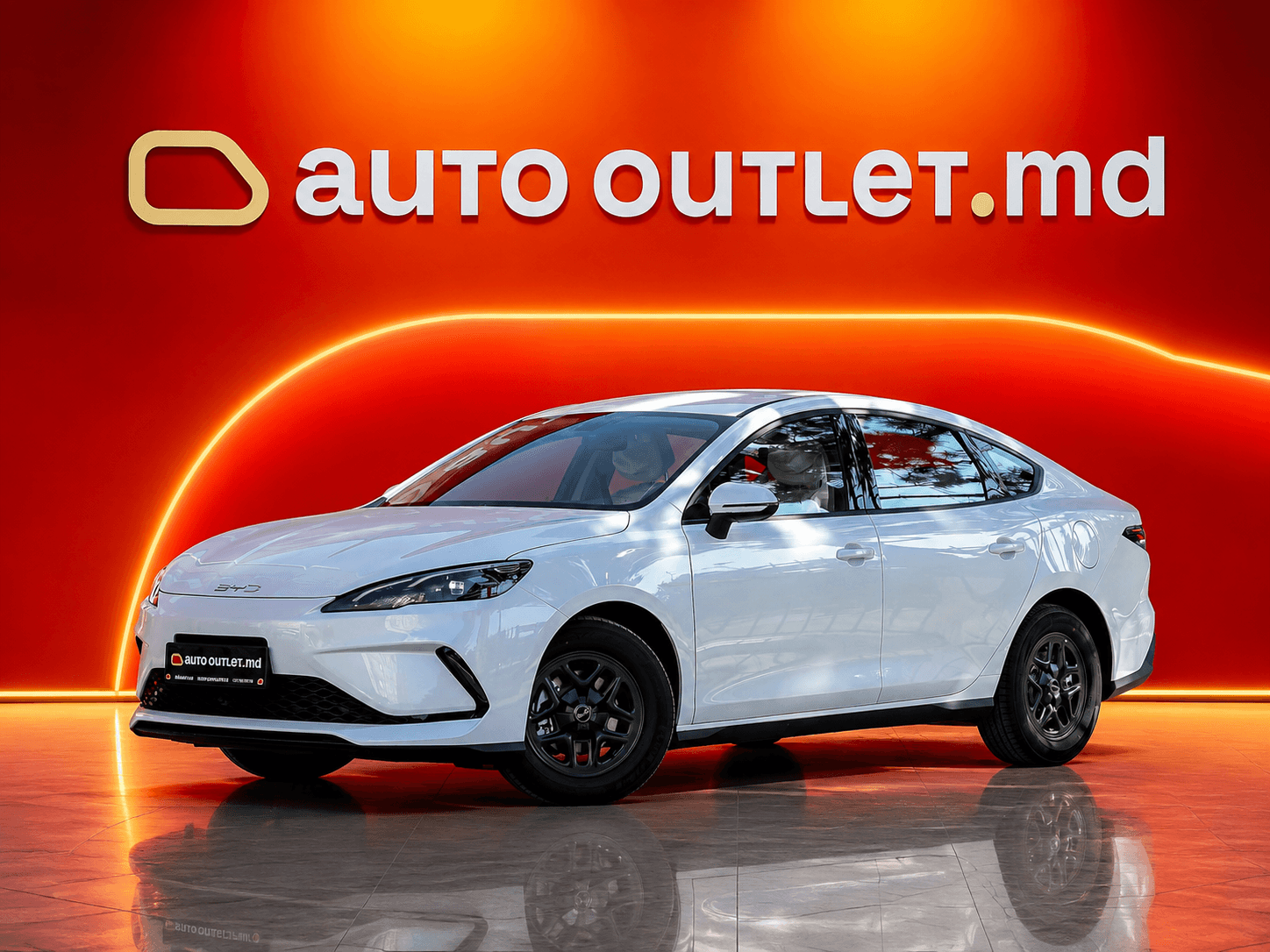 BYD Seal 052025 · new · Plug-in hybrid€14,490In stock
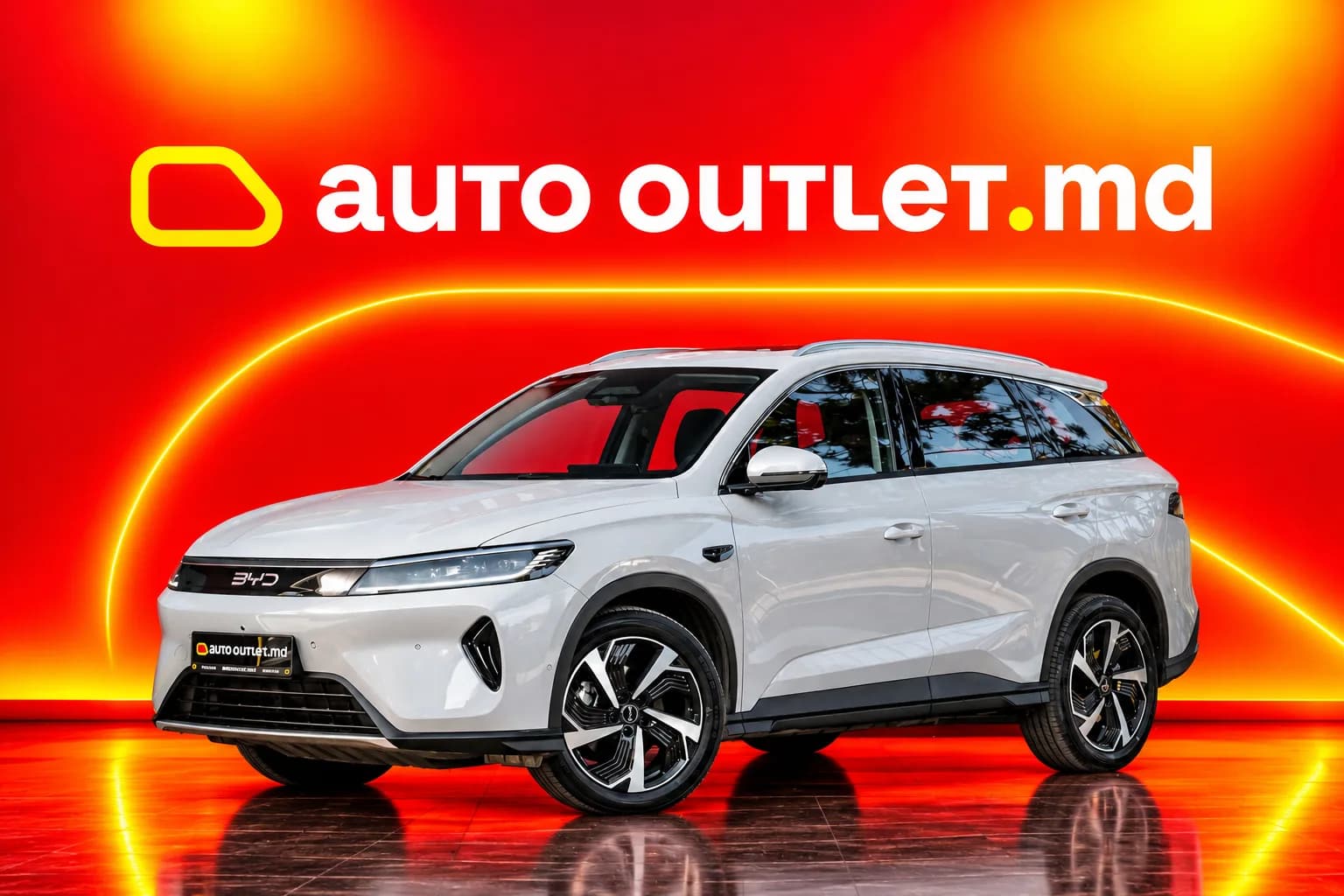 BYD Sealion 052025 · new · Plug-in hybrid€18,990In stock
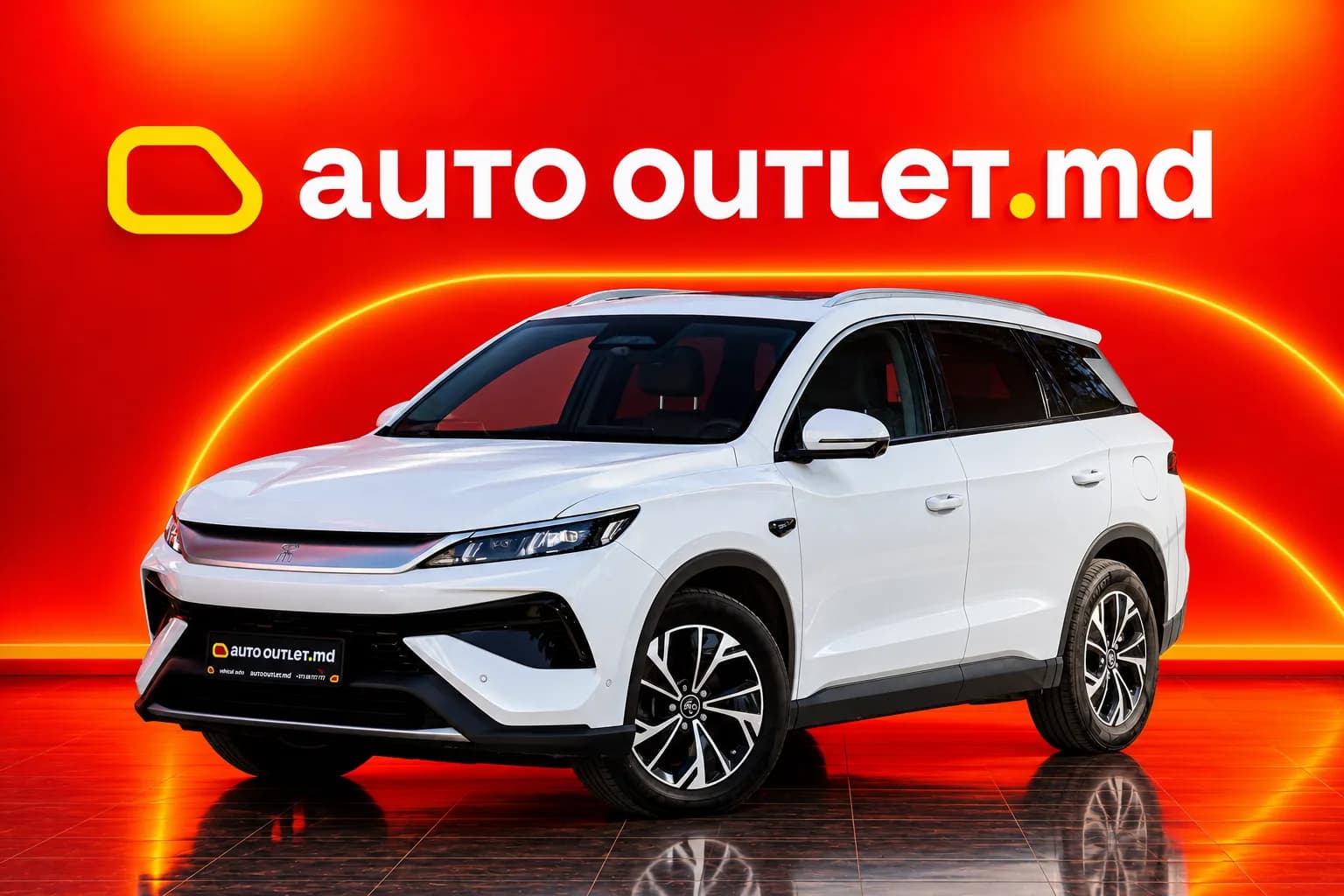 BYD Song Pro2025 · 2,800 km · Plug-in hybrid€20,190In stock
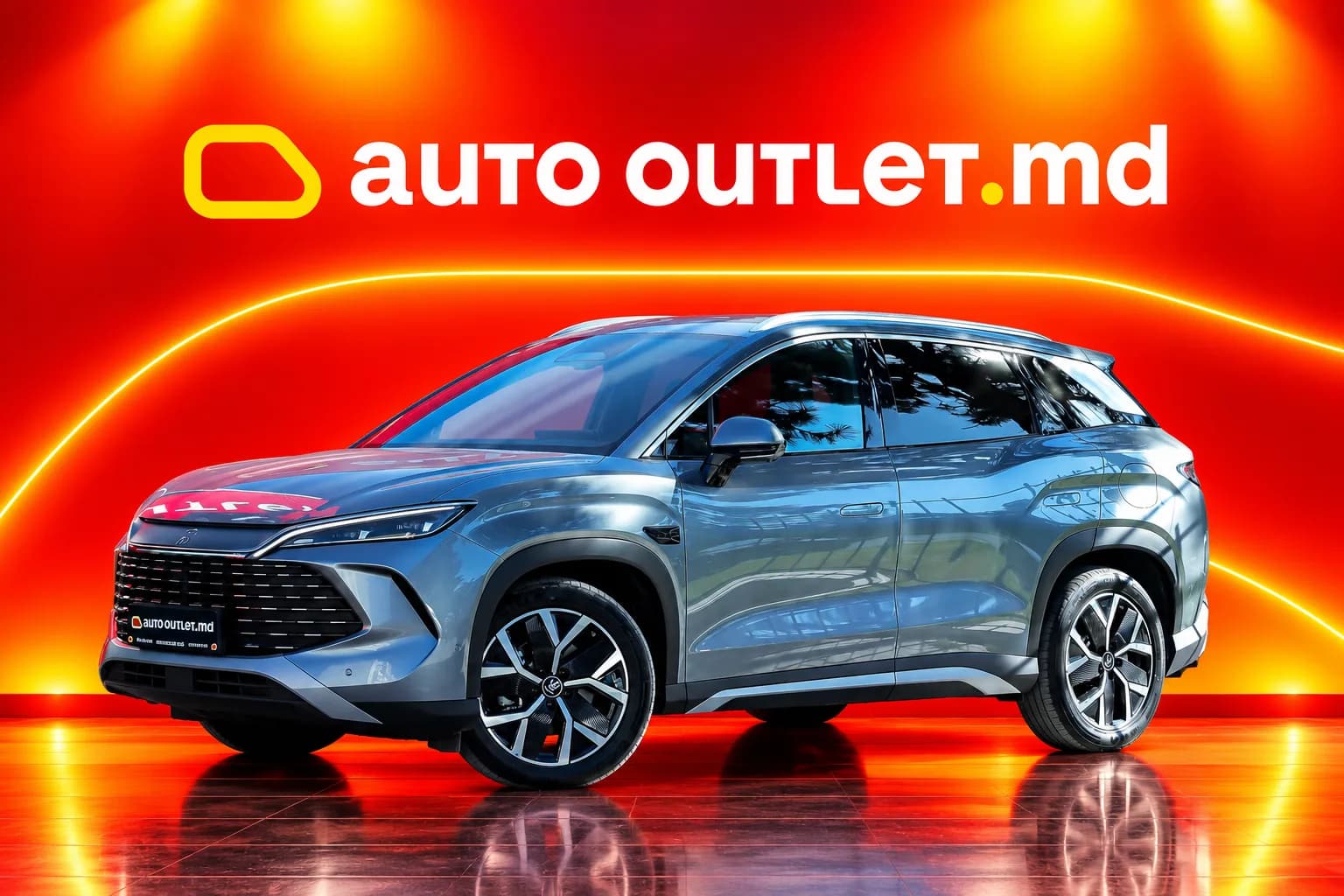 BYD Song L2025 · 13,000 km · Plug-in hybrid€23,490In stock
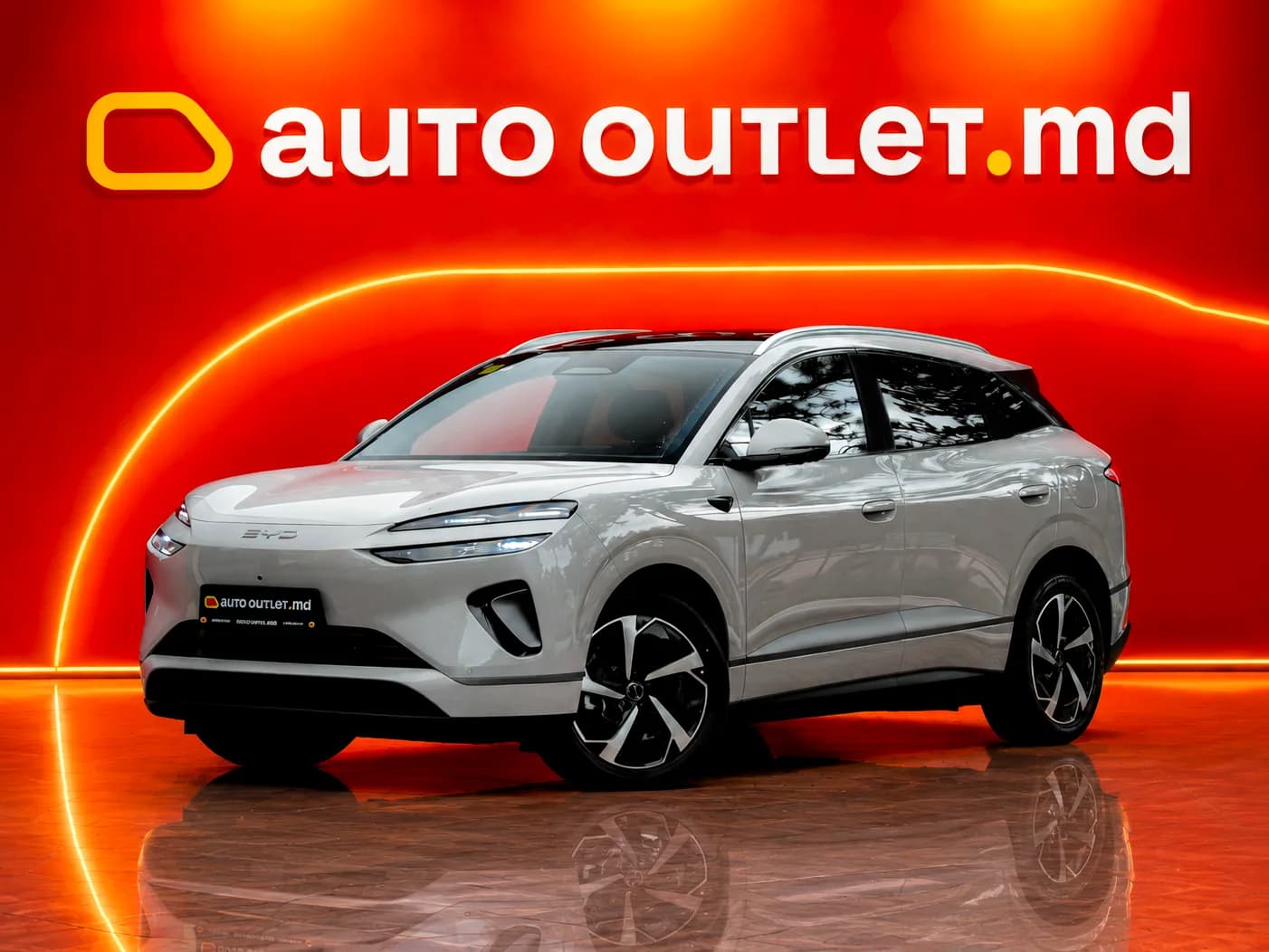 BYD Sealion 062025 · 20,000 km · Plug-in hybrid€23,990In stock
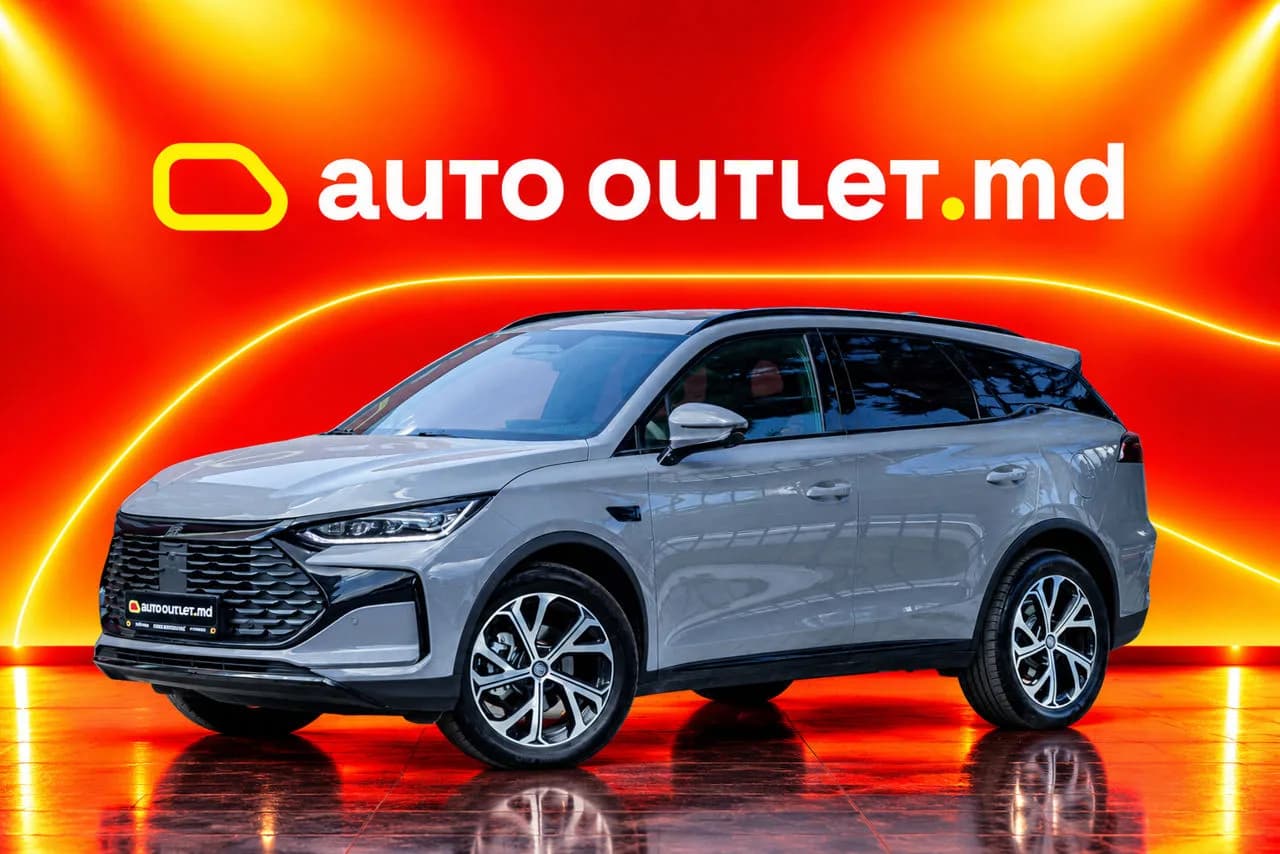 BYD Tang2025 · 1,000 km · Plug-in hybrid€26,990In stock
Stock changes daily. As of October 5, 2026.
FAQ
Does a BYD DM-i have to be plugged in to charge?
How much fuel does a DM-i use without charging?
What maintenance does the gasoline engine need?
Which should I choose: DM-i or EREV?
Sources
See the sources (31)
- CnEVPost: BYD launches 5th-gen DM hybrid tech with lower fuel consumption (28.05.2024): DM history (2008, 2021 DM-i/DM-p), DM 5.0: 2.9 l/100 km with a depleted battery, 2,100 km total range, 46.06% efficiency, first models Qin L and Seal 06.
- CarNewsChina: BYD Qin L launches in China with fifth generation PHEV system: The 2.9 l/100 km consumption is on the NEDC cycle; 10.08 and 15.874 kWh batteries; 74 kW engine. The 2,100 km range appears here as CLTC, but other Chinese sources give it without a cycle or as NEDC, so the text calls it only "claimed".
- CnEVPost: BYD launches Qin L, Seal 06 hybrid sedans, both with 5th-gen DM tech: Launch of the Qin L DM-i and Seal 06 DM-i, prices 99,800–139,800 yuan.
- SMM News (preluare Gasgoo): BYD further improves fifth-generation DM hybrid tech (2025): The 2025 DM 5.0 update: 2.6 l/100 km NEDC with a depleted battery.
- Automotive World (comunicat BYD): BYD introduces new DM-i hybrid technology and 1.5L new Xiaoyun engine: DM-i launch on 11/13/2020, the 1.5 l Xiaoyun engine with 43% efficiency, 15.5 compression ratio, Atkinson cycle; DM-p as the performance variant.
- BYD UAE: What is BYD DM-i Technology?: DM = Dual Mode, i = intelligent; the car is driven mainly by the electric motor, the gasoline engine serves as a generator.
- Autocar India: All you need to know about the BYD DM-i plug-in hybrid tech: DM-i components (Xiaoyun engine, EHS, Blade battery) and the EV, series and parallel modes.
- CarNewsChina: How BYD's DM-i 5.0 PHEV system reportedly works: Series-parallel architecture, the clutch, direct drive at high speeds.
- ADAC Autotest: BYD Seal U DM-i Design AWD (ianuarie 2026, PDF): 7.7 l/100 km with a depleted battery (5.3 city / 7.3 rural / 10.2 highway), 65 km electric, single-speed transmission, engine coupled to the front wheels only at high speeds, 2–3 s delay on sudden power demand in hybrid mode (verified in the PDF).
- ADAC: Test BYD Seal U: Elektro-Version oder lieber Plug-in-Hybrid?: Summary of the ADAC test: 7.7 l/100 km in hybrid mode, series-hybrid-type operation.
- Auto Bild: BYD Seal 6 DM-i Touring: Plug-in-Hybrid-Kombi im Test: 6.1 l/100 km with a depleted battery; 19 kWh LFP battery; 98 hp 1.5 l engine used mainly as a generator; 145 kW electric motor.
- Parkers: BYD Seal 6 Touring mpg, costs & reliability: Official WLTP consumption on the combustion engine only: 56.5–58.9 mpg (confirms the BYD Germany value of 4.8–5 l/100 km).
- Wikipedia: BYD F3DM: World's first mass-produced plug-in hybrid, December 2008; 1.0 l engine, 16 kWh LFP battery, 60 km electric, 48 units in the first year.
- Wikipedia: BYD Qin: Qin is the successor to the F3DM; first-generation Qin with a 1.5 turbo engine.
- Green Car Congress: BYD's Qin plug-in hybrid the best selling automotive EV in China (martie 2014): Qin launched on 12/17/2013 with the second-generation DM (DM II): 1.5 l turbo direct-injection engine, 113 kW, versus a 1.0 l naturally aspirated engine in the first generation (confirmed from the snippet shown in search results; the page could not be opened).
- Wikipedia: BYD Qin Plus: Qin Plus DM-i launched in January 2021, on sale from March 2021, among the first DM-i models; 3.8 l/100 km.
- Wikipedia: BYD Seal 06 DM-i: Launched on 05/28/2024 with DM 5.0; called Seal 6 DM-i in Europe; 1.5 l Atkinson engine, 74 kW; Blade LFP batteries.
- Wikipedia: BYD Song Plus: The Song Plus DM-i is sold in Europe as the Seal U DM-i, since May 2024.
- CnEVPost: BYD launches 2026 Sealion 06 DM-i (26.05.2026): DM 5.0, 38 kWh Blade LFP battery, 310 km CLTC electric, 3.3 l/100 km NEDC with a depleted battery, 175 kW electric motor.
- CnEVPost: BYD launches Sealion 05 DM-i and 2nd-gen Song Pro DM-i: Sealion 05 DM-i with DM 5.0, 74 kW engine, 12.9/18.3 kWh batteries, 75/115 km CLTC, 3.79 l/100 km NEDC.
- CnEVPost: BYD launches 2 new Song family models with DM 5.0 hybrid system: Song L DM-i with DM 5.0, launched in July 2024.
- Wikipedia: BYD Tang L: Tang L in DM-i and DM-p variants, 1.5 turbo engine, 35.6 kWh Blade battery.
- Wikipedia: BYD Sealion 07 DM: Sealion 07 DM in DM-i (economy) and DM-p (performance, two motors, all-wheel drive) variants.
- BYD USA: BYD Launched BAO 5 under its new brand Fangchengbao and the DMO technology: DMO = Dual Mode Off-road, Fangchengbao's off-road hybrid platform.
- InsideEVs: The new Volkswagen Golf plug-in hybrids have 62 miles of electric range: The Golf eHybrid sends power through a 6-speed DSG gearbox (an example of a classic European PHEV).
- BYD Cipru: Service Intervals DM-i (Seal U DM-i, PDF): Service schedule: oil and filters at 12 months/15,000 km, spark plugs at 45,000 km, EHS oil at 48 months/60,000 km, fuel filter at 24 months/30,000 km.
- Wikipedia: Fangchengbao Bao 5: The Leopard 5 (Bao 5) uses the DMO (Dual Mode Off-road) platform, 1.5 l engine with 145 kW.
- BYD Germania: SEAL 6 DM-i Touring – Plug-in-Hybrid Kombi: WLTP: 5–4.8 l/100 km combined with a depleted battery, 2.6–1.7 l/100 km weighted, up to 100 km electric, 1,350 km total range.
- CarNewsChina: BYD Tang L EV and PHEV SUV launched starting at 31,700 USD (10.04.2025): Tang L DM-p: 0–100 km/h in 4.3 s, 35.62 kWh battery.
- CarNewsChina: BYD Tang L with up to 1,086 hp to go overseas as Atto 8 (24.10.2025): DM-p: 115 kW 1.5 turbo engine, two electric motors with 400 kW in total, 0–100 km/h in 4.3 s, 35.62 kWh LFP battery.
- Sohu Auto: 效率更高更省油 解读比亚迪第五代DM技术 (2024): The DM 5.0 engine is still called Xiaoyun (骁云), 74 kW, compression 16, 46.06% efficiency; 2.9 l/100 km NEDC; DM generations: 2008, the second and third between 2013 and 2018, the fourth in 2021 (DM-i/DM-p), the fifth in 2024.
Update history
- 23.09.2026: first version, with data checked against public sources.