
What CLTC, WLTP, EPA and NEDC are
All four are standard tests. The car runs on a roller dynamometer, following a fixed program of speeds, stops and accelerations. Range is calculated from the energy used. Each region has its own test, and the speed programs differ a lot.
CLTC is the Chinese test. It has been used for electric cars since October 2021, under standard GB/T 18386.1-2021. In China it replaced the old NEDC. Almost all spec sheets of cars brought from China show the CLTC range.
WLTP is the European test. It applies to new car types from September 2017 and to all new cars registered in the EU from September 2018. The test is done at about 23°C.
EPA is the US test. The car goes through a city cycle and a highway cycle. The result is usually multiplied by 0.7 to account for cold, high speed and air conditioning. Or the manufacturer runs a full 5-cycle test. That is why the EPA figure is usually the closest to reality.
NEDC is the old European test, from the 1990s. It had gentle accelerations and constant speeds, so it gave overly optimistic numbers. You still see it in older listings and in some fuel consumption figures for Chinese PHEVs.
| CLTC-P (China) | WLTC class 3b (WLTP, EU) | NEDC (old) | EPA (US) | |
|---|---|---|---|---|
| Cycle duration | 1,800 s (30 min) | 1,800 s (30 min) | 1,180 s (~20 min) | two cycles: city (FTP-75) and highway (HWFET, 765 s) |
| Distance | 14.48 km | 23.27 km | 10.93 km | 17.77 km city + 16.5 km highway |
| Average speed | 28.96 km/h | 46.5 km/h | 33.35 km/h | 34.1 km/h city, 77.7 km/h highway |
| Top speed | 114 km/h | 131.3 km/h | 120 km/h | — |
| Time standing still | 22.1% | ~13% | ~23% (267 s) | a lot in the city, none on the highway |
| Real-world correction | no | no | no | yes: result × 0.7 or 5-cycle test |
| Where it is used | China, since 2021 | EU, since 2017–2018 | EU until 2018; China, for EVs, until 2021 | US |
Why CLTC gives the highest range
An electric car uses little energy at low speed and a lot at high speed, because of air resistance. CLTC has an average speed of only 28.96 km/h, and the car stands still 22% of the time. WLTP has an average speed of 46.5 km/h and a highway phase of up to 131 km/h.
A study by the Chinese automotive research institute in Tianjin tested the same car on all the cycles. Result: 509 km CLTC, 484 km NEDC, 398 km WLTP and 390 km EPA. Consumption rose from 12.8 kWh/100 km on CLTC to 17.1 kWh/100 km on EPA.
When China switched from NEDC to CLTC in 2021, Tesla raised the stated range of the Model 3 Performance from 605 km to 675 km. The battery had grown by only 1.6 kWh. The difference came mostly from the change of test.
Same car · Zeekr 7X Long Range RWD, 100 kWh battery
How many kilometers each test shows and how many you really get
The first two figures are official; the last three are EV Database estimates for real conditions, not our own measurements.
Source: CnEVPost (CLTC, Sept. 2024), zeekr.eu (WLTP), EV Database (real range)
Same car, different numbers
This is easiest to see with cars sold in both China and Europe. Below are the manufacturers' official figures and the EV Database estimate of average real range. The EV Database estimate is the average of city and highway, summer and winter. For the Zeekr 7X, the CLTC figure is for the 2024 Chinese version, with the same 100 kWh battery as the European model. The Chinese version updated in October 2025 has a 103 kWh battery and 802 km CLTC. For the Tesla Model Y, the EPA figure is for the US 2026 model year, meaning the same new generation as the Chinese version from January 2025.
In these four examples, the CLTC range is 23–28% higher than the WLTP range. The publication autoevolution recommends the same rough rule: WLTP ≈ CLTC × 0.8 and EPA ≈ CLTC × 0.7.
| CLTC (China) | WLTP (EU) | EPA (US) | Real, average (EV Database) | CLTC ÷ WLTP | |
|---|---|---|---|---|---|
| Zeekr 7X Long Range RWD, 100 kWh | 780 km | 615 km | not sold | ~505 km | 1.27 |
| BYD Seal RWD, 82.5 kWh | 700 km | 570 km | not sold | ~480 km | 1.23 |
| Tesla Model Y Long Range AWD (2025–2026) | 719 km | 568 km | 526 km (327 miles) | ~455 km | 1.27 |
| The car from the Tianjin study | 509 km | 398 km | 390 km | — | 1.28 |
What you really get: city, highway, winter
Lab tests do not include real cold, cabin heating or 130 km/h on the highway. That is why we also look at independent tests.
EV Database calculates real range by scenario. "Winter" means −10°C with heating, "summer" means 23°C without air conditioning, and on the highway the speed is a constant 110 km/h. For the Zeekr 7X Long Range RWD (780 km CLTC), the estimates are: 720 km in the city in summer, 465 km on the highway in summer, 365 km on the highway in winter.
In January 2026, ADAC tested 14 electric cars on a simulated Munich–Berlin route, at 0°C and an average of 111 km/h. On average, consumption was 57% above WLTP. The BYD Sealion 7 (in China: Sealion 07) did 293 km, versus 502 km WLTP. In the January 2025 edition of the same test, the BYD Seal RWD did 294 km, versus 570 km WLTP and 700 km CLTC.
Bjørn Nyland, a Norwegian YouTuber known for his range tests, drove an all-wheel-drive Zeekr 7X with a 100 kWh battery until it was fully drained. He got 550 km at 90 km/h and 405 km at 120 km/h. The AWD version has 543 km WLTP in the EU, so less than the RWD version in the chart. The source does not state the temperature.
Note: in the city in summer, an electric car can even beat its WLTP figure, because speeds are low and braking recovers energy. The highway and the cold are what cut range the most.
For PHEVs and EREVs: electric range and fuel consumption
For plug-in hybrids too, the battery-only range on a Chinese spec sheet is usually CLTC. The Galaxy Starship 7 EM-i, for example, has 55 km or 120 km of CLTC electric range, depending on the battery. We assume the same gap applies as for EVs, but we have not found verified CLTC–WLTP figure pairs for the same PHEV, so this is an estimate.
Chinese spec sheets sometimes mix cycles. For the BYD Qin L DM-i, the electric range is given under CLTC (80 or 120 km), while the 2.9 l/100 km consumption with a depleted battery is given under the old NEDC. Always ask which test each figure comes from.
A PHEV's "combined" WLTP consumption (for example 1–2 l/100 km) assumes you charge the battery often and drive a lot on electricity. The European Commission compared real-world data from PHEVs registered in 2021: WLTP consumption of 1.69 l/100 km, real consumption of 5.94 l/100 km. Real CO2 emissions were 3.5 times higher than in the test.
The reason: people charge less often than the test assumes. The EU is changing the calculation formula in two steps, from 2025 and from 2027, to make the figures more realistic.
- The useful PHEV figure: consumption with a depleted battery (also called "charge-sustaining") and which cycle it was measured on.
- The second useful figure: electric-only range, compared with your daily commute.
- The "combined" consumption of 1–2 l/100 km is real only if you charge almost every day.
Our rule of thumb for buyers in Moldova
Based on the examples above, we did a simple calculation. These are our estimates, not official figures. They vary from model to model and from driver to driver.
- From CLTC to WLTP: divide by about 1.25 (in our examples, between 1.23 and 1.28).
- Average real range, year-round: about two-thirds of CLTC (63–69% in the examples above).
- Highway in summer, 110 km/h: about 60% of CLTC (Zeekr 7X: 465 of 780 km).
- Highway in winter: about half of CLTC or less (42–50% in the examples above, per EV Database and ADAC).
- City in summer: you can get close to the CLTC figure or even beat the WLTP one.
What to ask before you buy
- Ask which test the range in the listing is based on. For cars brought from China, the figure is usually CLTC.
- For daily driving, count on about two-thirds of the CLTC figure. For a long winter trip on the highway, count on about half (our estimate).
- Compare two cars only on the same test: CLTC with CLTC, WLTP with WLTP, or the same independent test (EV Database, ADAC, Bjørn Nyland).
- For PHEVs and EREVs, ask for the consumption with a depleted battery and the cycle it was measured on, not the "combined" consumption of 1–2 l/100 km.
Examples from our catalog
- Zeekr 7XAn EV sold in both China and the EU: 780 km CLTC versus 615 km WLTP for the 100 kWh rear-wheel-drive version. EV Database average real-range estimate: ~505 km.
- Zeekr 001The 2026 Chinese version has up to 810 km CLTC (103 kWh battery), while the European Long Range RWD variant has up to 620 km WLTP. The versions differ, so do not compare them directly.
- BYD Sealion 07The electric version is sold in Europe as the Sealion 7. In the ADAC winter test (0°C, highway) it did 293 km, versus 502 km WLTP.
- Geely Galaxy Starship 7A PHEV with 55 or 120 km of CLTC electric range, depending on the battery. The real electric range will be lower, especially in winter.
EVs and EREVs from our offer
Cars where range matters most: EREVs from stock and EVs we bring to order. Ask us for each one's WLTP range. Prices are final in Moldova.
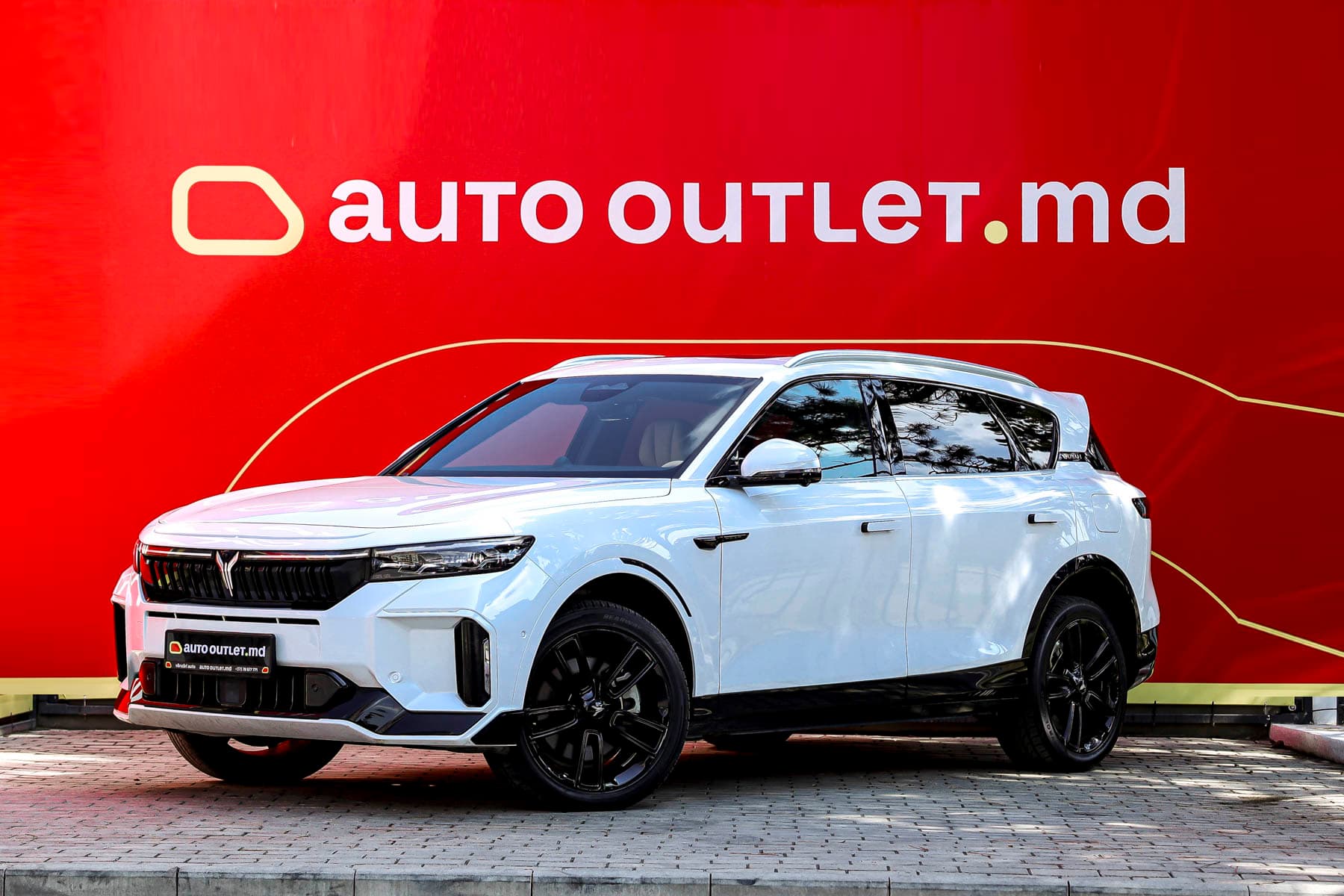 Voyah Free2023 · 40,000 km · EREV · 4x4€27,190In stock
 LiXiang L62024 · 32,000 km · EREV · 4x4€32,990In stock
 LiXiang L72025 · 16,000 km · EREV · 4x4€45,490In stock
 LiXiang L82025 · 15,000 km · EREV · 4x4€49,490In stock
 LiXiang L92024 · 27,000 km · EREV · 4x4€54,990In stock
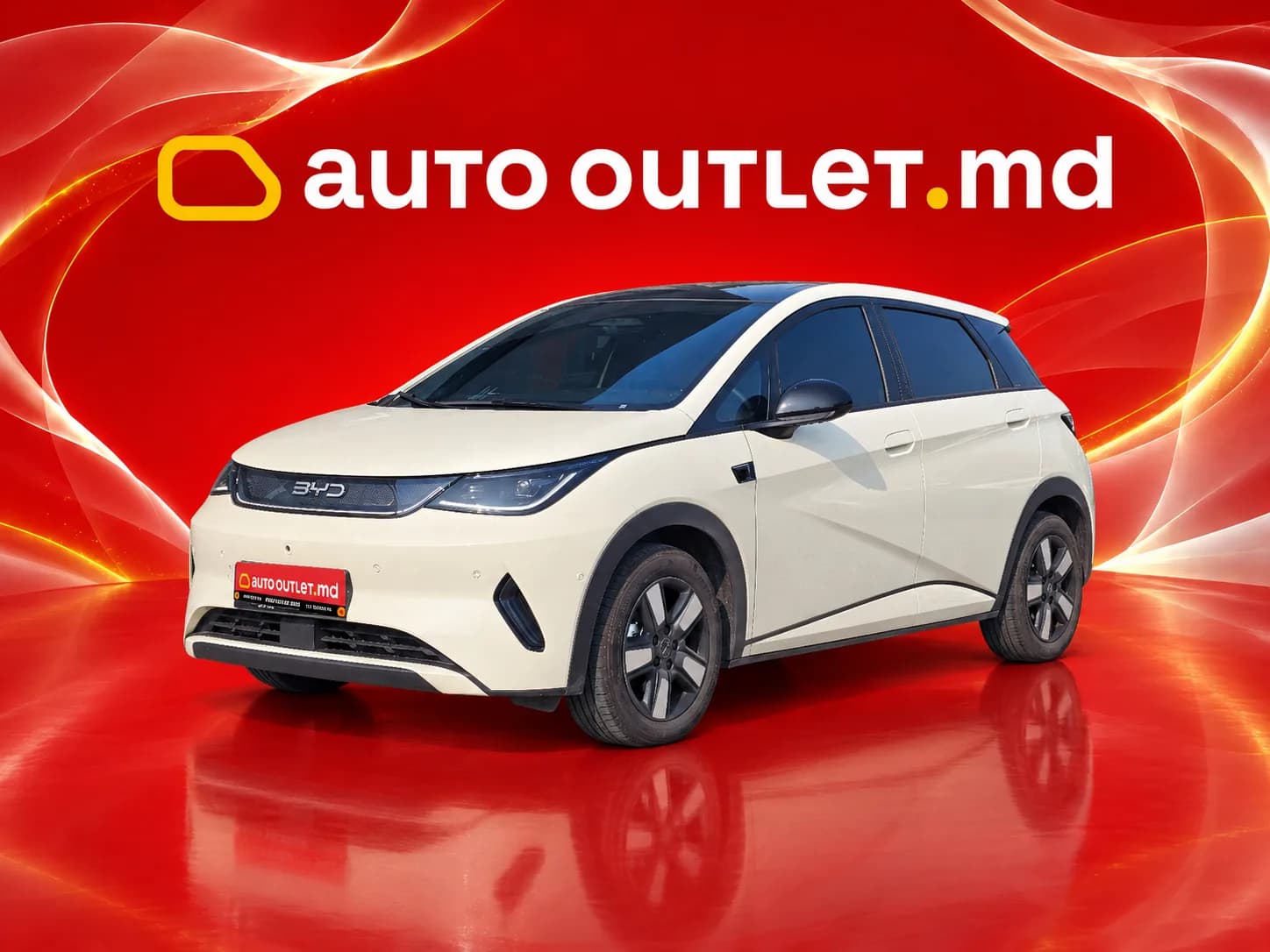 BYD Dolphin2025 · 4,600 km · Electric€17,700To order
Stock changes daily. As of October 5, 2026.
FAQ
Why is the range in the listing higher than the real one?
What real range should I expect in winter?
How do I compare two cars rated on different cycles?
What is NEDC?
Sources
See the sources (34)
- China Light-Duty Vehicle Test Cycle (Wikipedia, citează Liu et al., Int. J. Automotive Technology, 2020): CLTC-P parameters (1,800 s, 14.48 km, 28.96 km/h, max 114 km/h, 22.11% idle); adopted in October 2021 to replace NEDC; the Tianjin study (509/484/398/390 km); Tesla Model 3 Performance 605 → 675 km.
- DieselNet: China Light-Duty Vehicle Test Cycle (CLTC): Standard GB/T 38146.1-2019, CLTC-P parameters, three phases.
- GB/T 18386.1-2021, metode de test pentru consum și autonomie la vehicule electrice (Code of China): EV range in China is tested on CLTC; in effect since October 1, 2021.
- DieselNet: Worldwide Harmonized Light Vehicles Test Cycle (WLTC): WLTC class 3b: 1,800 s, 23,266 m, max 131.3 km/h, ~13% time stopped; NEDC → WLTP transition 2017–2019.
- Worldwide Harmonised Light Vehicles Test Procedure (Wikipedia): WLTC 3b average speed of 46.5 km/h.
- WLTPfacts.eu (ACEA): When will WLTP changes take place: WLTP for new types from September 2017, for all new registrations from September 2018.
- New European Driving Cycle (Wikipedia): NEDC: 1,180 s, ~10.9 km, ~33 km/h, max 120 km/h; criticism.
- DieselNet: ECE 15 + EUDC / NEDC: NEDC: 1,180 s, 10.93 km, 33.35 km/h, max 120 km/h, 267 s stopped (~23%).
- EPA Test Procedures for Electric Vehicles and Plug-in Hybrids (fueleconomy.gov): EPA range: city and highway cycles, result × 0.7 or the 5-cycle method; most EVs use the 0.7 factor.
- FTP-75 și HWFET (Wikipedia): HWFET: 765 s, 16.5 km, 77.7 km/h; FTP-75 (related page): 17.77 km, 34.1 km/h.
- autoevolution: WLTP vs EPA vs CLTC (23.11.2025): Rough rules: WLTP ≈ CLTC × 0.8, EPA ≈ CLTC × 0.7; EPA is the closest to reality.
- CnEVPost: Zeekr launches 7X SUV (20.09.2024): Zeekr 7X with 100 kWh: 780 km CLTC; 75 kWh: 605 km CLTC.
- CarNewsChina: 2026 Zeekr 7X launched (28.10.2025): Updated Zeekr 7X in China: 900 V, 103 kWh battery, 802 km CLTC (RWD).
- Zeekr Europa: Zeekr 7X: Zeekr 7X Long Range RWD 100 kWh: 615 km WLTP; Privilege AWD: 543 km.
- EV Database: Zeekr 7X Long Range RWD: Estimated real range ~505 km; summer city 720, summer highway 465, winter highway 365 km; methodology (−10°C with heating, 23°C, 110 km/h).
- CnEVPost: BYD Seal officially launched in China (29.07.2022): BYD Seal RWD 82.5 kWh: 700 km CLTC.
- BYD Belgia (presă): prețul BYD Seal (04.09.2023): BYD Seal Design RWD 82.5 kWh: 570 km WLTP.
- EV Database: BYD SEAL 82.5 kWh RWD Design: Estimated real range ~480 km; winter highway ~350 km.
- ADAC: BYD Seal RWD în testul de iarnă: 294 km in the test versus 570 km WLTP; 28.4 kWh/100 km versus 16.6 WLTP.
- ADAC: testul de iarnă 2025 (31.01.2025): 2025 edition: same method (0°C, Munich–Berlin, 582 km, average 111 km/h); includes the BYD Seal RWD.
- ADAC: testul BYD Seal (Ecotest): Seal Design RWD: 21.2 kWh/100 km including charging losses, ~405 km range in the Ecotest.
- CnEVPost: Tesla launches facelifted Model Y in China (10.01.2025): Model Y Long Range AWD 78.4 kWh: 719 km CLTC.
- EV Database: Tesla Model Y Long Range AWD (Juniper): WLTP 568–586 km; estimated real range ~455 km; winter highway ~325 km.
- fueleconomy.gov: Tesla Model Y 2025–2026: 2026 Model Y Long Range AWD: 327 miles (526 km) EPA; 2025 model year (old version): 311 miles.
- Notebookcheck: EPA range for the refreshed Model Y (Juniper): Facelifted Model Y Long Range AWD: 327 miles EPA, 5% above the old version.
- ADAC (presă, 22.01.2026): test de iarnă pentru 14 mașini electrice de familie: 0°C, simulated Munich–Berlin route; average consumption 57% above WLTP.
- ADAC: metodologia testului de iarnă 2026: Climate chamber at 0°C, 582 km, average 111 km/h; WLTP is measured at 23°C.
- ADAC: BYD Sealion 7 Excellence AWD în testul de iarnă 2026: 293 km in the test versus 502 km WLTP; 35.3 versus 21.9 kWh/100 km.
- Elektrowoz.pl: testul Bjørn Nyland pentru Zeekr 7X (09.07.2025): Zeekr 7X Performance AWD 100 kWh: 550 km at 90 km/h, 405 km at 120 km/h; temperature not stated.
- CnEVPost: Zeekr launches updated 001 (11.10.2025): Zeekr 001 2026: up to 810 km CLTC (103 kWh RWD).
- Zeekr Europa: Zeekr 001: Zeekr 001 Long Range RWD: up to 620 km WLTP.
- CarNewsChina: BYD Qin L launches in China (28.05.2024): Qin L DM-i: 2.9 l/100 km NEDC, electric range 80/120 km CLTC.
- CarNewsChina: Geely Galaxy Starship 7 PHEV launched (06.12.2024): Galaxy Starship 7 EM-i: 55 km or 120 km CLTC electric range.
- Comisia Europeană, COM(2024) 122 final (18.03.2024): raport despre emisiile reale de CO2: PHEVs registered in 2021: 1.69 l/100 km WLTP versus 5.94 l/100 km real-world; real CO2 3.5 times higher; utility factor revised from 2025 and 2027 (EU Reg. 2023/443).
Update history
- 23.09.2026: first version, with data checked against public sources.