
400V or 800V: what actually changes
Charging power is simple to calculate: power = voltage × current. A station delivering 200 kW has to push 500 amps into a 400V car, but only 250 amps into an 800V one.
Current is what heats the cables, the connector and the battery cells. Heat grows with the square of the current: at half the current, heating drops to about a quarter. That is why an 800V car can take high power for longer, with thinner and lighter cables.
Most 800V cars use silicon carbide (SiC) chips in the inverter. They lose less energy than classic silicon chips at high voltages. BYD, for example, uses SiC chips rated for up to 1,500V in its 1,000V platform.
Careful: not every version of a model has 800V. The first-generation Xiaomi SU7 had 400V on the Standard and Pro versions and 800V only on the Max. Only the new generation, from 2026, has 752V on the Standard and Pro and 897V on the Max. Many manufacturers write “800V” for 750–900V systems too; it is the same family of technology.
| 400V | 800V | |
|---|---|---|
| Current for 200 kW | about 500 A | about 250 A |
| Cable heating at the same power | about 4 times higher | baseline (1×) |
| Home charging (AC, wallbox or outlet) | the same | the same |
| At an older DC station limited to 500 V | charges directly | needs a “booster” in the car, otherwise it won't charge |
| Examples | Xiaomi SU7 Standard and Pro (first generation, 2024) | Zeekr 7X, Zeekr 007, Xiaomi YU7, Avatr 06 (electric) |
kW and kWh: the speed and the tank
kWh (kilowatt-hour) shows how much energy fits in the battery. It is like the size of the fuel tank. kW (kilowatt) shows how fast the energy goes in. It is like the flow rate of the pump nozzle.
A 100 kWh battery charged from 10% to 80% takes in 70 kWh. At an average of 70 kW, that takes an hour. At an average of 140 kW, it takes half an hour.
At the station you pay for energy, meaning kWh, not speed. At EV Point, the DC rate starts at 9.48 lei per kWh in the Center and South and at 10.44 lei in the North. For those 70 kWh, our calculation comes to about 660 lei at the lowest rate. If you don't unplug the car within 15 minutes after charging ends, you pay 15 lei per hour for occupying the port.
Peak DC charging power · kW
What the car can take vs. what Moldova's most powerful stations deliver
A car charges only as fast as the station allows: in Moldova, the most powerful stations we found are 150–240 kW, no matter how much the car can take in China.
Source: Carscoops and CnEVPost (Zeekr 001; 1,140 kW = 12C × 95 kWh), Inside China Auto (Xiaomi YU7), CarNewsChina (Zeekr 007), stiri.md (999 Sculeni), EV Point (Chișinău hub, rates), Circutor (Raption 50)
What 4C, 5C or 10C mean
C-rate compares charging power with battery size. 1C means power equal to the battery's capacity: in theory, the battery would fill up in one hour. 2C means 30 minutes, 4C means 15 minutes, 5C means 12 minutes.
Example: the Xiaomi YU7 Max has a 101.7 kWh battery and charges at 5.2C. 101.7 × 5.2 ≈ 529 kW, exactly the peak power Xiaomi announced, 528 kW.
The “C” figure is a peak value, not an average. The battery does not stay at 5C from 0 to 100%. That is why the real 10% to 80% time is longer than simple division would suggest.
Records announced in China have climbed fast. On March 17, 2025, BYD unveiled its Super e-Platform: 1,000V, 1,000 A, 1,000 kW and 10C, with 400 km of range added in 5 minutes. Zeekr answered with a 1.2 MW per-connector station, and the Zeekr 001 updated in October 2025 (900V, 95 kWh battery) claims 10–80% in 7 minutes and a 12C rate, meaning about 1,140 kW at peak. These figures are reached only at the brands' own stations, in China.
Peak or average: the charging curve
Charging power is not constant. It climbs quickly to the peak, stays there for a few minutes, then drops gradually. Above about 70–80%, the battery management system cuts the current sharply to protect the cells. That is why manufacturers quote the time from 10% to 80%, not from 0 to 100%.
A measured example: in a test published by a Chinese car blogger, a Li MEGA (102.7 kWh battery, 800V, 5C) hit a peak of 521.2 kW and did 10–80% in 10 minutes and 36 seconds. Our calculation: about 72 kWh went in, so the average was around 400 kW, almost a quarter below the peak.
The version matters too. The Xiaomi YU7 Standard (96.3 kWh LFP battery) peaks at 250 kW and does 10–80% in 21 minutes. The YU7 Max (NMC, 101.7 kWh) has 528 kW and does it in 12 minutes. The Zeekr 7X for Europe claims 13–16 minutes from 10% to 80%, and the updated one for China, 10–10.5 minutes. It all depends on the battery, the temperature and the station.
What fast-charging stations Moldova has
EV Point, the country's main charging network, has 152 stations and 332 charge points in Moldova and Romania. Its first fast-charging hub, opened in 2023 at 27 Mihai Viteazul St. in Chișinău, has three 150 kW stations and two 120 kW ones. The 120 kW ones also have a GB/T connector, for cars built for the Chinese market.
The 999 network (Simpals) opened a 240 kW station in Sculeni (Ungheni district) in May 2026, the most powerful in its network. That is the station's total power; we could not find out how many kW a single car gets or which connectors it has. We did not find any more powerful stations in Moldova. The national electric mobility strategy plans 150 fast-charging stations by 2030, one every 60 km on national roads.
The good news for 800V: the Circontrol Raption 150 stations used by EV Point deliver 150 kW only between 720 and 920 volts. A 400V car gets at most about 100 kW from them, because the station is limited to 250 amps. So at these stations an 800V car charges faster than a 400V one. If two cars charge at once, the power is split between them, for example 75 + 75 kW.
The less good news: some 50 kW DC stations, like the classic Raption 50, put out a maximum of 500 volts. An 800V car charges from them only if it has a converter (“booster”) that steps up the voltage. Many do, but not all: for example, the electric Mercedes CLA launched in 2025 in some European countries without a booster. Ask and test before a long trip.
Our estimate for an 800V car with a battery of about 100 kWh: 10% to 80% takes around 30–35 minutes at a 150 kW station and around an hour and a half at a 50 kW one. The calculation: 70 kWh delivered at an average of about 120–140 kW and 45–50 kW, respectively. On paper, the same car does it in 10–12 minutes in China.
Does fast charging damage the battery?
A little, and only if you use it very often. Geotab analyzed over 22,700 electric cars (study published in January 2026). Batteries lose 2.3% of their capacity per year on average. Cars often charged at over 100 kW lost up to 3.0% per year, compared with about 1.5% for those charged mostly slowly.
Practical advice: charge slowly, on AC, at home or at the office, and use fast charging on the road. Don't keep the battery near 100% or near 0% for days on end.
What to ask before you buy
- Ask for the exact voltage of the version you are buying, not of the model. Within the same model, the base version may have 400V or half the peak charging power.
- If you almost always charge at home, 800V doesn't matter. Look at the power of the onboard (AC) charger, for example 7, 11 or 22 kW.
- Ask whether the car has a booster for 500 V DC stations and which connector it has: GB/T (the China version) or CCS2 (the European version). Check the EV Point map for which connectors the stations on your route have.
- Compare the 10% to 80% time at a 150 kW station, not the peak in the brochure. That is what you will use here, not the 1 MW station in China.
- For trips to Romania or Ukraine, plan your stops at 120–240 kW stations. At 50 kW stations, the break stretches to over an hour.
Examples from our catalog
- Zeekr 7X800V; the updated Chinese version with a 75 kWh battery does 10–80% in 10.5 minutes, the European one claims 13–16 minutes.
- Xiaomi YU7800V on all versions, but the peak differs a lot: 250 kW on the Standard and 528 kW (5.2C) on the Max.
- Xiaomi SU7The first generation had 400V on the Standard and Pro; the 2026 generation has 752V and 897V. The year and version matter.
- Zeekr 001Updated in 2025 to 900V: 10–80% in 7 minutes, at 12C, meaning about 1,140 kW, only at Zeekr stations in China.
- Denza Z9 GTThe electric version has BYD “flash” charging of up to 1,500 kW (10–70% in 5 minutes, at BYD stations). From 2026, in China, the plug-in hybrid version gets it too; the 2024 plug-in hybrid model charged on DC at only 82 kW.
EVs we bring to order
We have no EVs in stock right now, but we bring them to order. For each one we'll tell you the architecture (400V or 800V) and peak charging power. Prices are final in Moldova.
 BYD Dolphin2025 · 4,600 km · Electric€17,700To order
 Geely Galaxy E52024 · 6,000 km · Electric€18,000To order
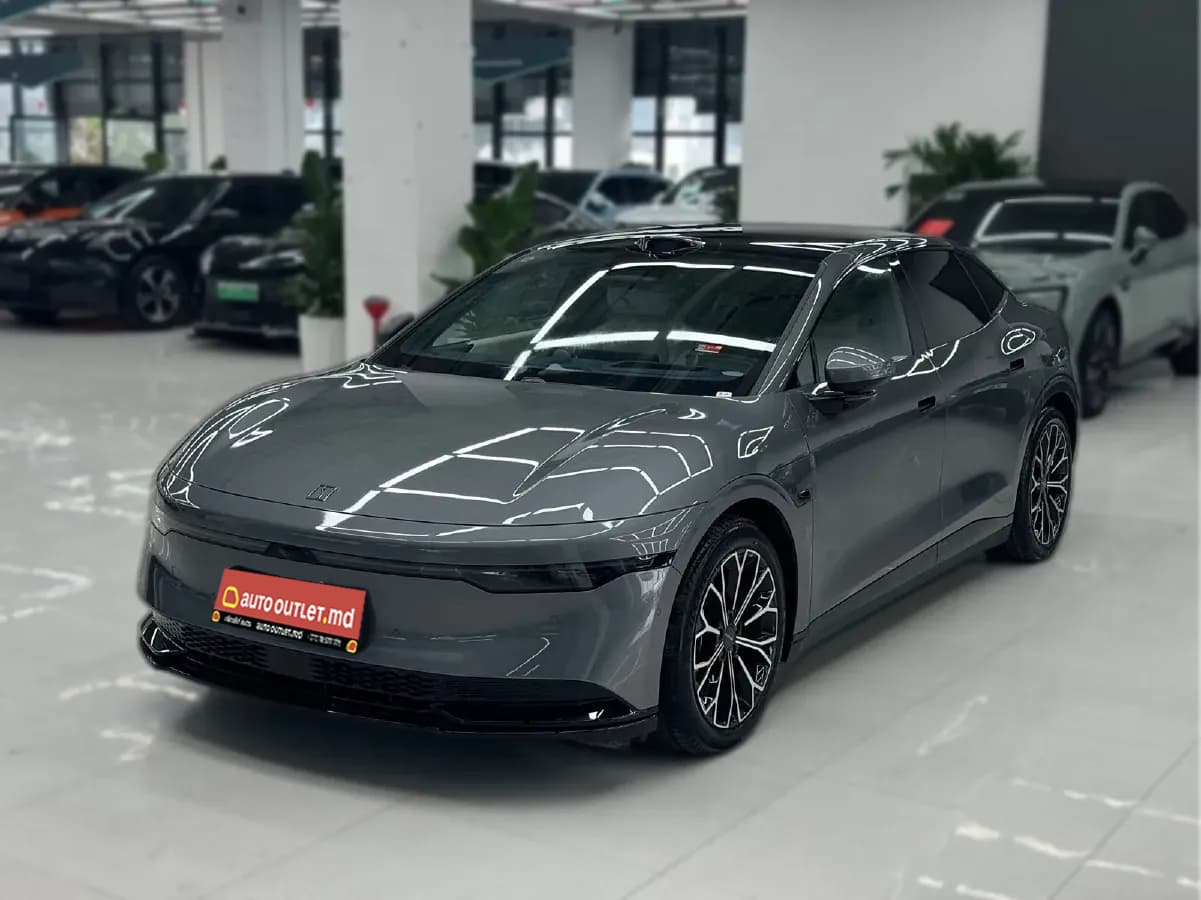 Zeekr 0072024 · 4,400 km · Electric · 4x4€25,000To order
 Polestar 42024 · 55,300 km · Electric · 4x4€27,100To order
 Denza N72024 · 26,000 km · Electric · 4x4€28,990To order
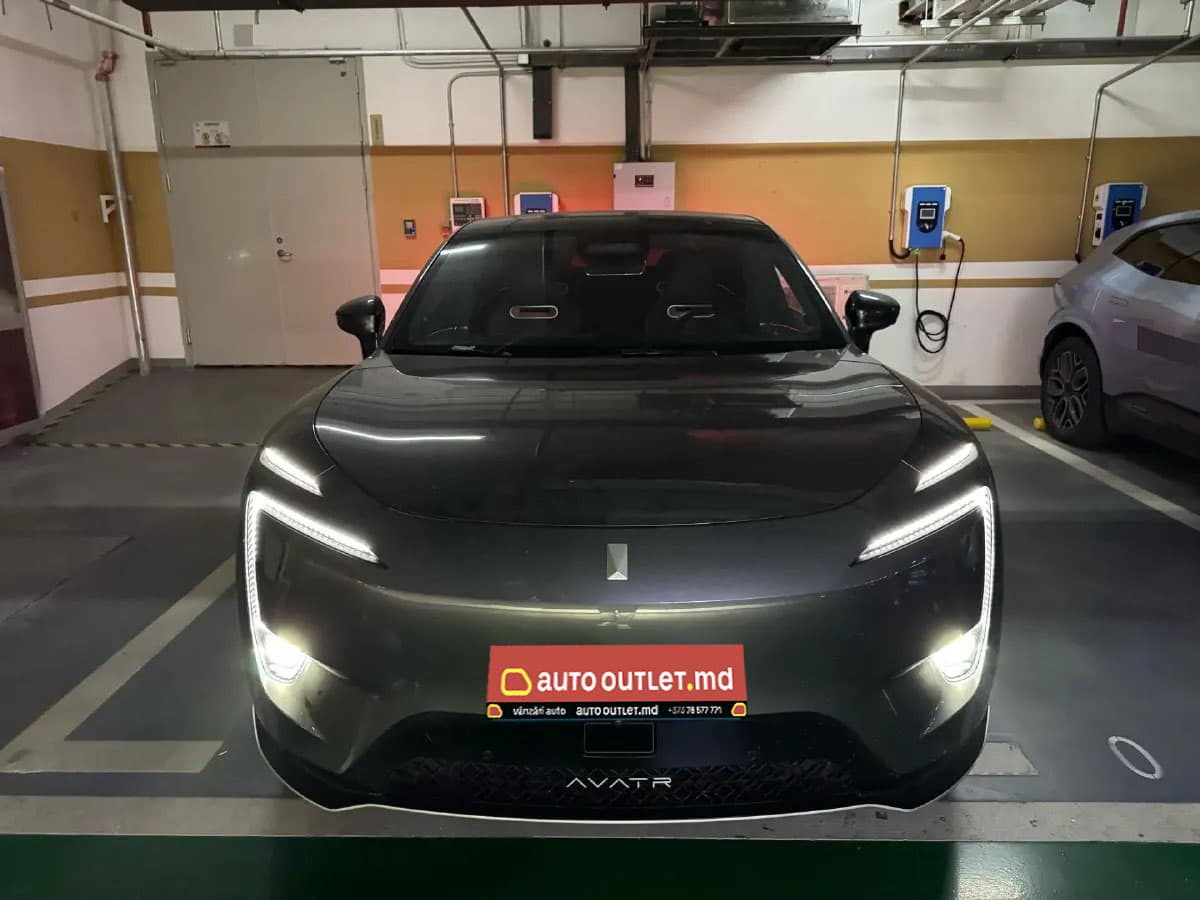 Avatr 112024 · 18,000 km · Electric · 4x4€29,500To order
Stock changes daily. As of October 5, 2026.
FAQ
Do I need 800V if I charge at home?
Does an 800V car work at Moldova's charging stations?
What does 5C mean?
Does fast charging damage the battery?
Sources
See the sources (35)
- BYD Unveils Super e-Platform with Megawatt Flash Charging (17.03.2025): 1,000V, 1,000 A, 1,000 kW, 10C, 400 km in 5 minutes; first models Han L and Tang L; SiC chips up to 1,500V; booster compatible with public stations; over 4,000 stations planned in China.
- ADAC: Elektroautos mit 800-Volt-System (02.12.2025): For AC charging at home, 800V doesn't matter; less copper and heat; booster or battery reconfiguration at 400V stations.
- IDTechEx assesses status of 800V for EVs (Semiconductor Today, dec. 2025): Most DC stations worldwide are 400V; DC-DC booster; lower current, thinner cables; SiC more efficient than IGBT at 800V.
- Porsche Newsroom: The battery, 800-volt system voltage: 800V reduces charging time and the weight and space of the wiring.
- Battery University BU-402: What Is C-rate?: Definition of C-rate: 1C = one hour, 2C = 30 minutes.
- Battery University: Ultra-fast Charging: Charging power drops toward the end; charge acceptance is best at a medium state of charge.
- Xiaomi YU7 Launched (Inside China Auto, 26.06.2025): YU7 800V; Standard 96.3 kWh LFP, 250 kW, 10–80% in 21 min; Max 101.7 kWh NMC, 5.2C, 528 kW, 12 min.
- Xiaomi SU7 (Wikipedia, cu trimiteri la evkx.net și ArenaEV): First generation: 400V on the Standard and Pro, 800V on the Max; 2026 generation: 752V and 897V.
- First drive: next-gen Xiaomi SU7 (Electrek, 27.04.2026): 800V on all new versions (752V/897V); Max 10–80% in 12 min.
- Zeekr launches updated 7X SUV (CnEVPost, 28.10.2025): 7X with 75 kWh Golden battery at 800V: 10–80% in 10.5 min; 103 kWh versions at 900V: 10 min.
- Zeekr 7X (site-ul european Zeekr): 800V system; 10–80% in 13–16 minutes, depending on version; 75 and 100 kWh batteries.
- Zeekr 007 launched (CarNewsChina, 27.12.2023): Zeekr 007 800V; 75 kWh Golden LFP battery with a 500 kW peak and 4.5C.
- Zeekr launches new 007 model year with 5.5C battery (electrive, 14.08.2024): Zeekr 007 2025: 5.5C, 10–80% in 10.5 minutes.
- Zeekr 001 to receive 900-volt system voltage (electrive, 17.10.2025): Zeekr 001 moves from 800V to 900V; 95 kWh Golden battery, up to 12C, 10–80% in 7 minutes.
- This EV charges almost as fast as a gas car refuels (Carscoops, 08.10.2025): Zeekr 001 2025: up to 1,140 kW; Zeekr has started installing 1,300 kW stations in China.
- Zeekr launches updated 001 with enhanced powertrain, ultra-fast charging (CnEVPost, 11.10.2025): Zeekr 001 2026: 900V; 95 kWh Golden Battery, 12C, 10–80% in 7 minutes; 103 kWh Qilin, 10 minutes.
- Zeekr unveils 1.2 MW charger (CnEVPost, 31.03.2025): Zeekr 1.2 MW per-connector station; when announced, no car could use it.
- Li Mega charges 10–80% in 10 minutes 36 secs (CarNewsChina, 26.02.2024): Li MEGA: 102.7 kWh, 800V, 5C, 521.2 kW peak, 10–80% in 10 min 36 s.
- Li Auto i8 launched (CarNewsChina, 29.07.2025): Li i8: 800V, 5C, 500 km added in 10 minutes.
- DENZA Z9GT arrives in Europe (Electric Cars Report, 08.04.2026): Z9 GT electric: flash charging of up to 1,500 kW, 10–70% in 5 min, 10–97% in about 9 min.
- Denza Z9 (Wikipedia): Z9 GT PHEV 2024: 38.5 kWh battery, 82 kW DC charging.
- BYD's refreshed Denza D9 MPV and Z9 GT with Flash Charging reaches dealers in China (CarNewsChina, 07.05.2026): Updated Z9 GT: flash charging on all versions, including the PHEV (63.8 kWh battery); 10–70% in 5 minutes, 10–97% in 9 minutes.
- Avatr 06 (Wikipedia): Avatr 06 EV on an 800V architecture.
- Avatr officially launches 06 sedan (CnEVPost, 20.04.2025): Avatr 06 BEV on an 800V platform; EREV versions also exist.
- Avatr 11 (Wikipedia): Avatr 11 on a 750V platform, 240 kW charging.
- What were they thinking? Mercedes CLA EV can only use 800V DC fast chargers (Carscoops, 05.05.2025): Example of an 800V car launched without a booster for 400V stations.
- EV Point: deschiderea primului hub de încărcare rapidă (26.07.2023): Chișinău hub, 27 Mihai Viteazul: 3 × 150 kW and 2 × 120 kW, with GB/T on the 120 kW units.
- EV Point: pagina principală: 152 stations, 332 charge points in Moldova and Romania (accessed 09/23/2026).
- EV Point: Tarife: DC from 9.48 lei (Center, South) and 10.44 lei (North); occupancy fee of 15 lei/hour after 15 minutes; Raption 50/100/150 stations.
- Cât costă încărcarea unei mașini electrice în Moldova (PiataAuto.md, dec. 2023): EV Point rates are per kWh (then 7.86 lei/kWh DC in the Center and South), so “MDL/EV” on the website means lei per kWh.
- Circontrol Raption 150 – fișă tehnică: CCS 100–920 V, 250 A; 150 kW at 720–920 V, 100 kW at 400 V; two cars at once share the power (e.g. 75 + 75 kW).
- Circutor Raption 50 EVO CCS2 – fișă produs: 50 kW station with 50–500 V DC output, 125 A.
- 999 a deschis la Sculeni o stație ultra-fast de 240 kW (stiri.md, 25.05.2026, material promoțional): 240 kW station in Sculeni, the most powerful in the 999 network; 15 stations at 13 locations.
- 150 fast charging stations will be installed by 2030 (IPN, 06.08.2025): 150 fast-charging stations by 2030, one every 60 km; over 250 charge points, 15 operators.
- Geotab: EV Battery Health Study (13.01.2026): 22,700+ cars; average degradation 2.3%/year; up to 3.0%/year with frequent DC charging above 100 kW, compared with about 1.5%.
Update history
- 23.09.2026: first version, with data checked against public sources.